

Manual Handling Training for Support Workers
The practical, OT-led course that gives support workers the skills to do the job safely – and gives care organisations proof it's been done properly.
Upcoming training for support workers
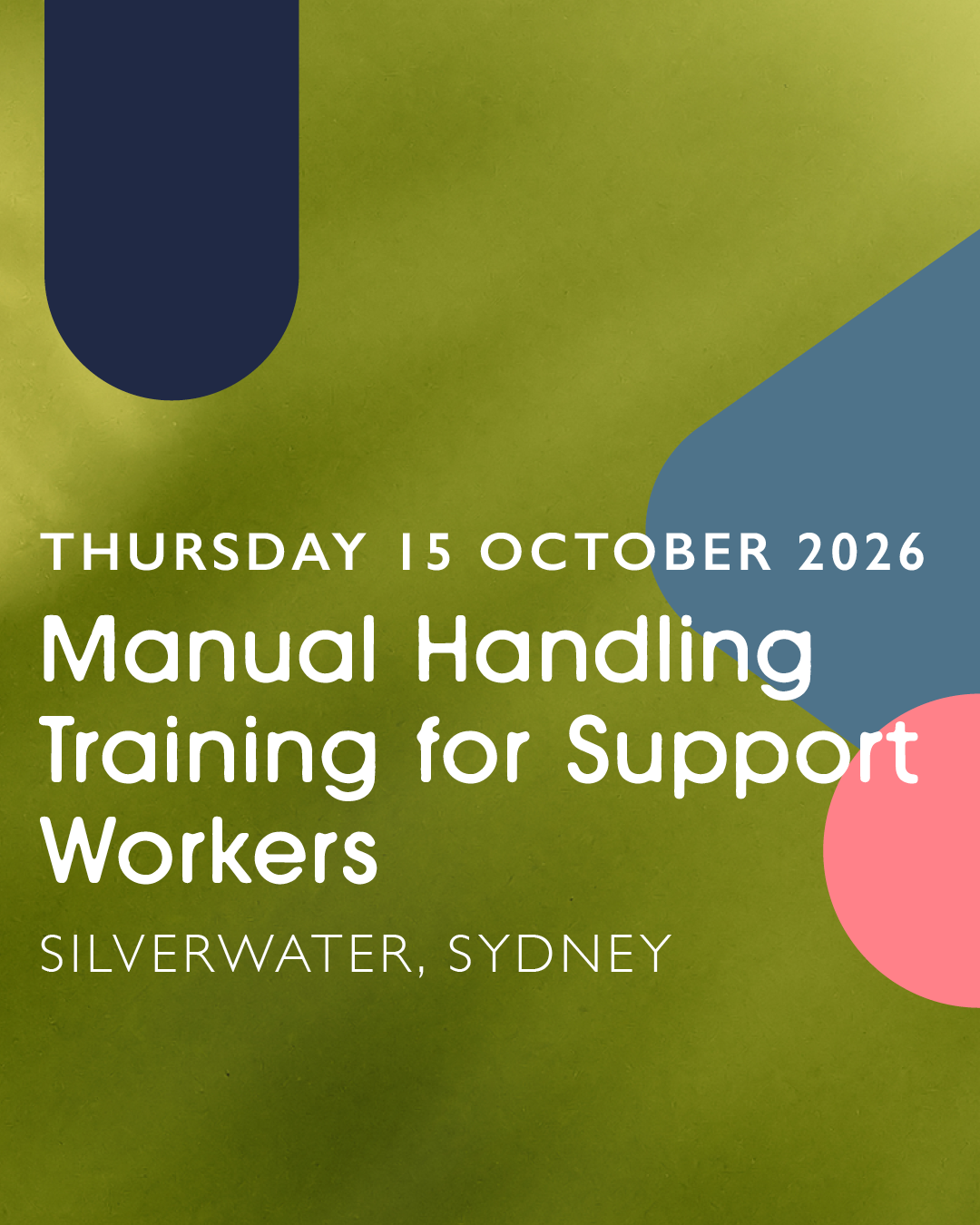
Foundational Training for Support Workers
DATE: Thursday 15th October 2026
TIME: 9.30am–3.00pm
WHERE:Avant Innovations Showroom, Unit 1/41 Vore St, Silverwater [Sydney]
COST: $295+GST per person
PLACES: Limited to 15 participants, so send your team early to secure a place
INCLUSIONS: venue, current equipment and catering for morning tea and lunch all provided
A practical, hands-on approach — real scenarios, real equipment, real skills your team can use immediately.
Includes access to a full range of equipment (hoisting, bed mobility, standing lifters, wheelchairs), an OT-led course, catered morning tea and lunch and a Certificate of Attendance.
NOTE: Should you need an invoice issued for payment rather than paying now, please email training@movementum.com.au.
Want to book for 8+ people? Please email us for a session price [cheaper per person rate].
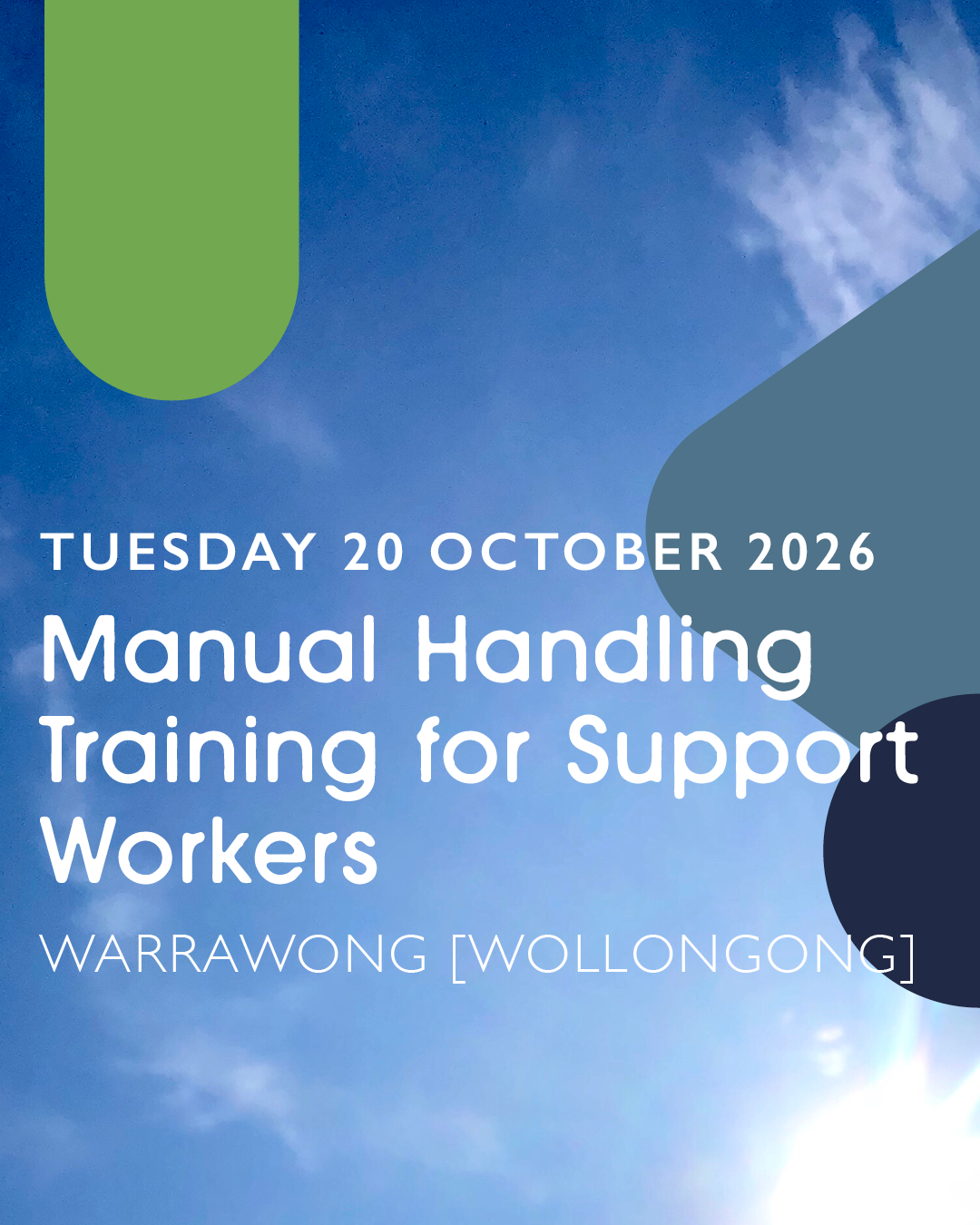
Foundational Training for Support Workers
DATE: Tuesday 20th October 2026
TIME: 9.30am–3.00pm
WHERE: Country Care Group, Warrawong
COST: $295+GST per person
PLACES: Limited to 10 participants, so send your team early to secure a place
INCLUSIONS: venue, current equipment and catering for morning tea and lunch all provided
A practical, hands-on approach — real scenarios, real equipment, real skills your team can use immediately.
Includes access to a full range of equipment (hoisting, bed mobility, standing lifters, wheelchairs), an OT-led course, catered morning tea and lunch and a Certificate of Attendance.
NOTE: Should you need an invoice issued for payment, please email training@movementum.com.au.
Want to book for 8+ people? Please email us for a session price [cheaper per person rate].
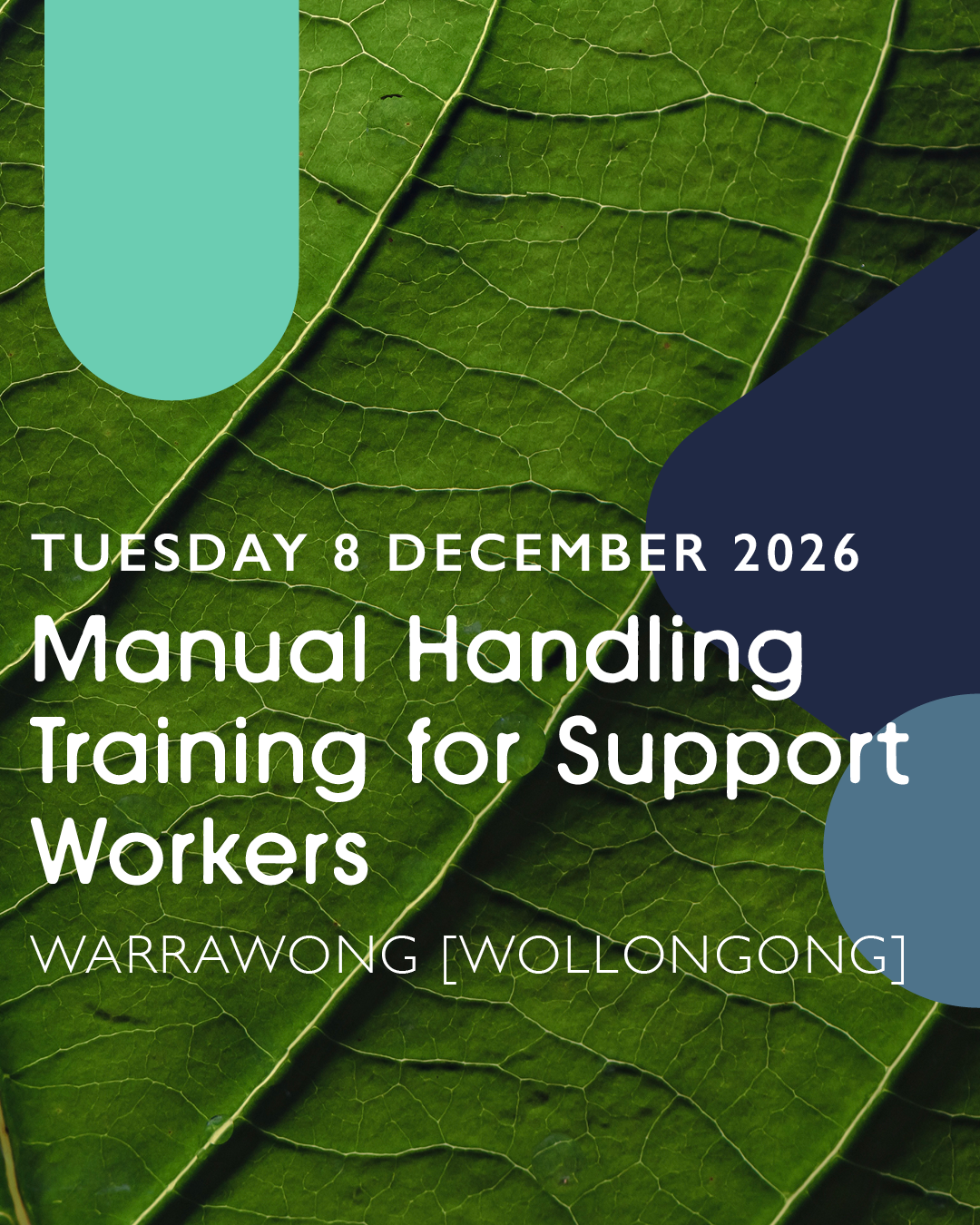
Foundational Training for Support Workers
DATE: Tuesday 8th December 2026
TIME: 9.30am–3.00pm
WHERE: Country Care Group, Warrawong
COST: $295+GST per person
PLACES: Limited to 10 participants, so send your team early to secure a place
INCLUSIONS: venue, current equipment and catering for morning tea and lunch all provided
A practical, hands-on approach — real scenarios, real equipment, real skills your team can use immediately.
Includes access to a full range of equipment (hoisting, bed mobility, standing lifters, wheelchairs), an OT-led course, catered morning tea and lunch and a Certificate of Attendance.
NOTE: Should you need an invoice issued for payment, please email training@movementum.com.au.
Want to book for 8+ people? Please email us for a session price [cheaper per person rate].
23/9 Warrawong BOOKED OUT
〰️
15/10 Silverwater OPEN NOW
〰️
29/10 Narellan BOOKED OUT
〰️
24/11 Warrawong BOOKED OUT
〰️
8/12 Warrawong BOOKED OUT
〰️
20./10 Warrawong OPEN NOW
〰️
23/9 Warrawong BOOKED OUT 〰️ 15/10 Silverwater OPEN NOW 〰️ 29/10 Narellan BOOKED OUT 〰️ 24/11 Warrawong BOOKED OUT 〰️ 8/12 Warrawong BOOKED OUT 〰️ 20./10 Warrawong OPEN NOW 〰️
Foundation Manual Handling Training for Support Workers
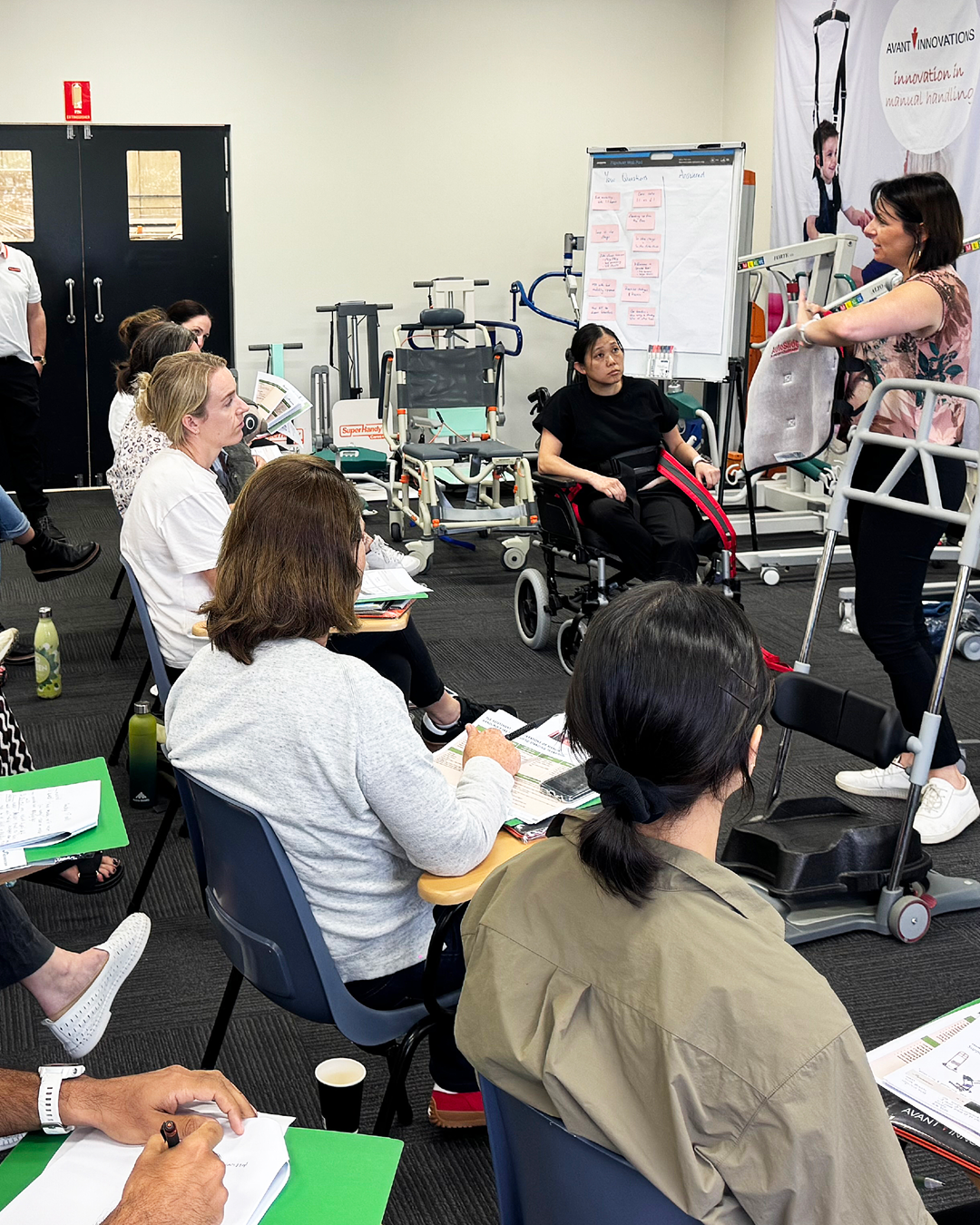
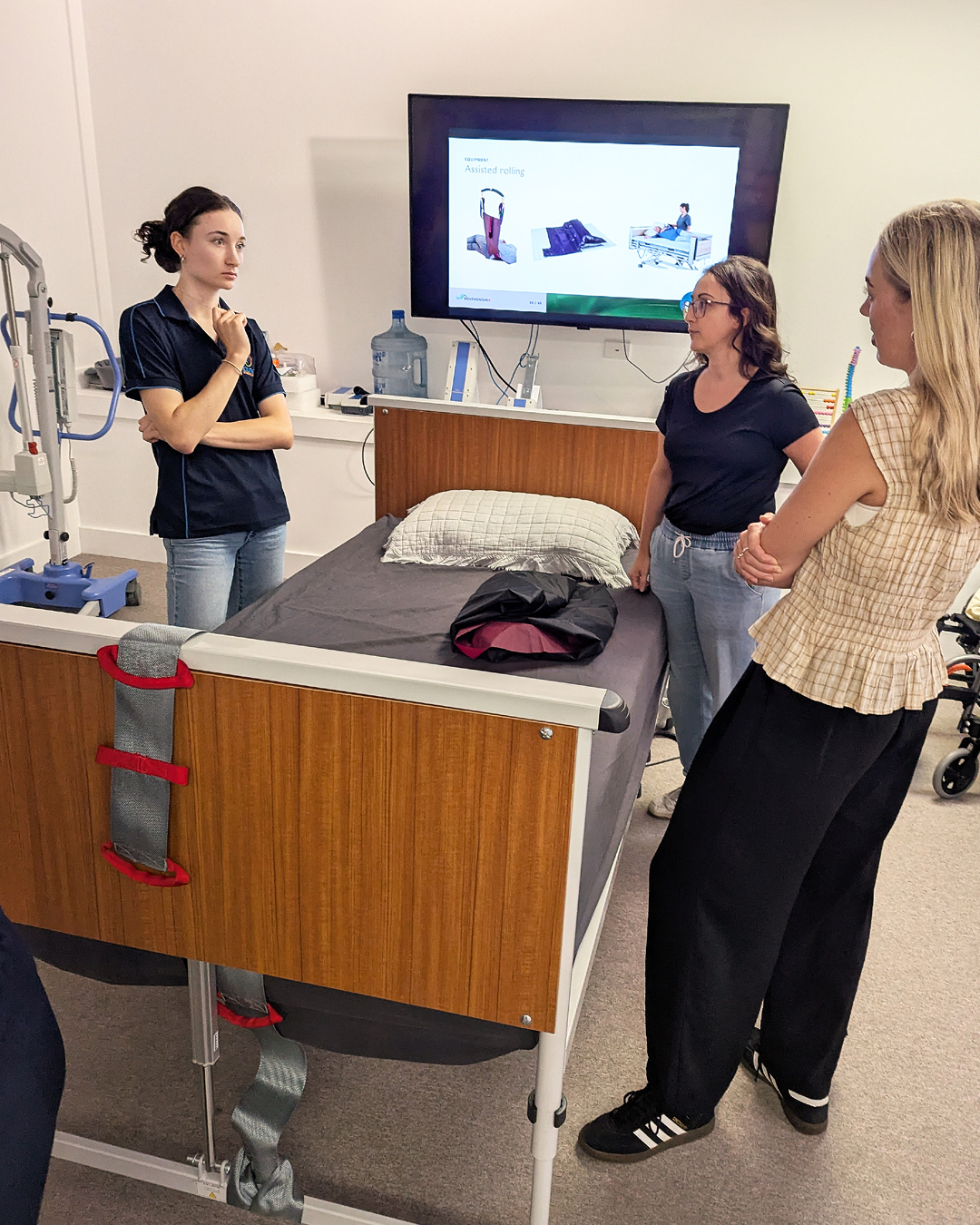
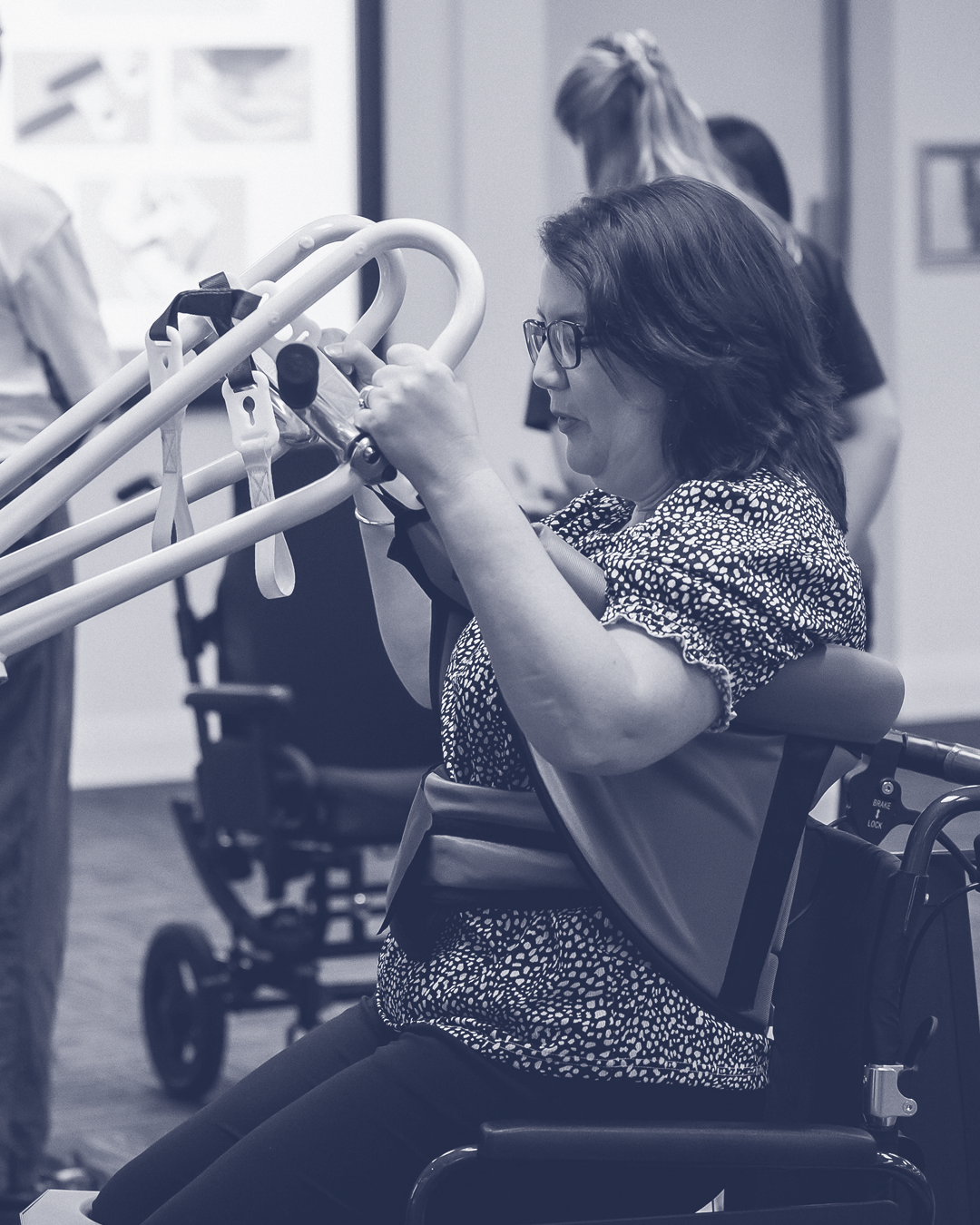
A day of hands-on training, led by practising Occupational Therapists, that covers the legal essentials of hazard identification and reporting alongside the real, physical skills support workers use every day: supported walking, hoisting, transfers, slings, slide sheets and safe bed mobility.
Suitable for support workers employed by a care organisation, and for private and self-employed support workers who need to hold – or refresh – their own manual handling competency.
Who this course is for
Care organisations
SIL, residential, home care and day program providers who need every support worker trained, and periodically refreshed, in safe manual handling as part of meeting their WHS obligations to staff and to the people they support.
Individual and private support workers
Support workers who are self-employed, working through a platform, or simply want their own current, OT-verified manual handling competency – whether that's for a new role, a renewing contract, or peace of mind in day-to-day work.
Why this training matters now
Manual handling is one of the most common causes of injury in disability and aged care support work - and one of the most preventable. Under the WHS Act 2011 (NSW), organisations have a duty to ensure workers have the training and instruction needed to carry out hazardous manual tasks safely.
From 1 July 2026, the Healthcare and Social Assistance Industry Code of Practice became an enforceable minimum standard, not just guidance. It sets out specific expectations for how organisations manage the risks of people handling and hazardous manual tasks - including the training and competency of the workers doing that work.
For support workers, the requirement is personal as well as organisational: identify and report hazards, follow documented plans and procedures, attend training and apply it, and know when to seek support. This course is built to meet both sides of that obligation in a single day.

What a training day includes
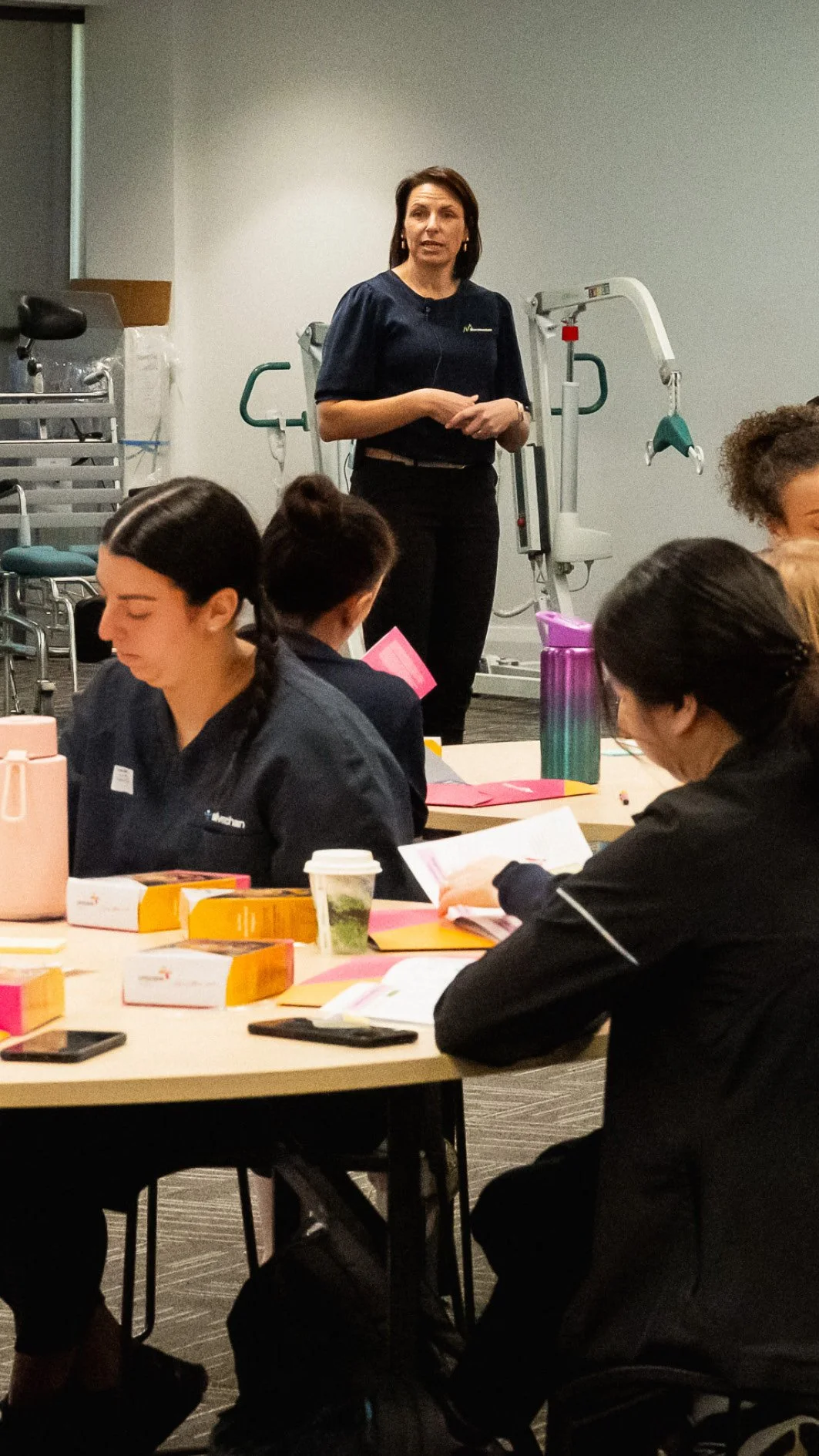
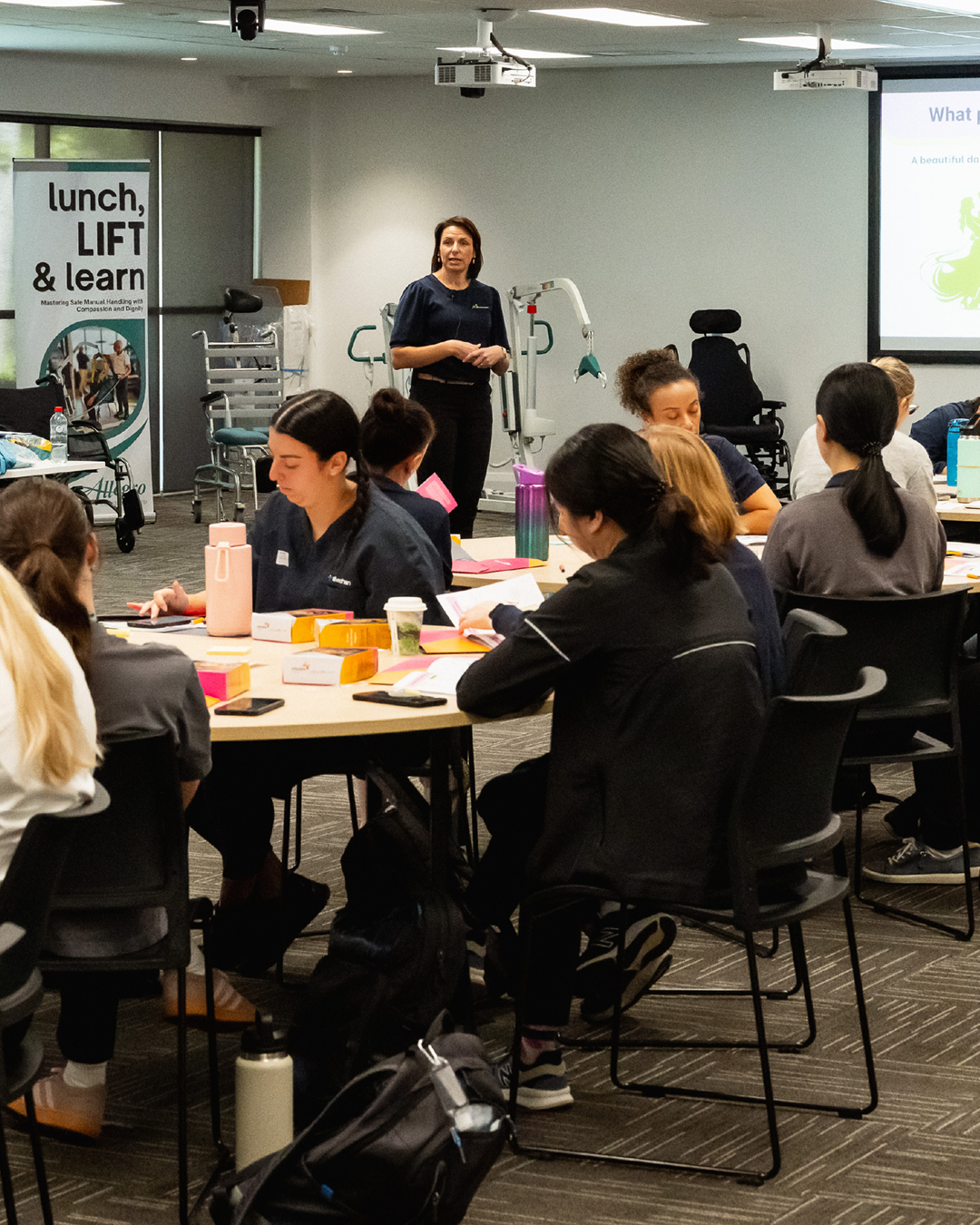
This is a hands-on training day. Support workers move, practise, ask questions and problem-solve real scenarios – not just watch a slide deck. Across the day, the course covers:
Where WHS law and the Code of Practice apply to your day-to-day work – in plain language, not legal jargon.
A simple, repeatable framework for identifying hazards in a task, a person, a load and an environment before they cause an injury, and how and when to report one.
Supported walking and standing transfers – with and without equipment, and knowing when you're providing too much support.
Falls management – how to prevent falls, and what to do if one takes place.
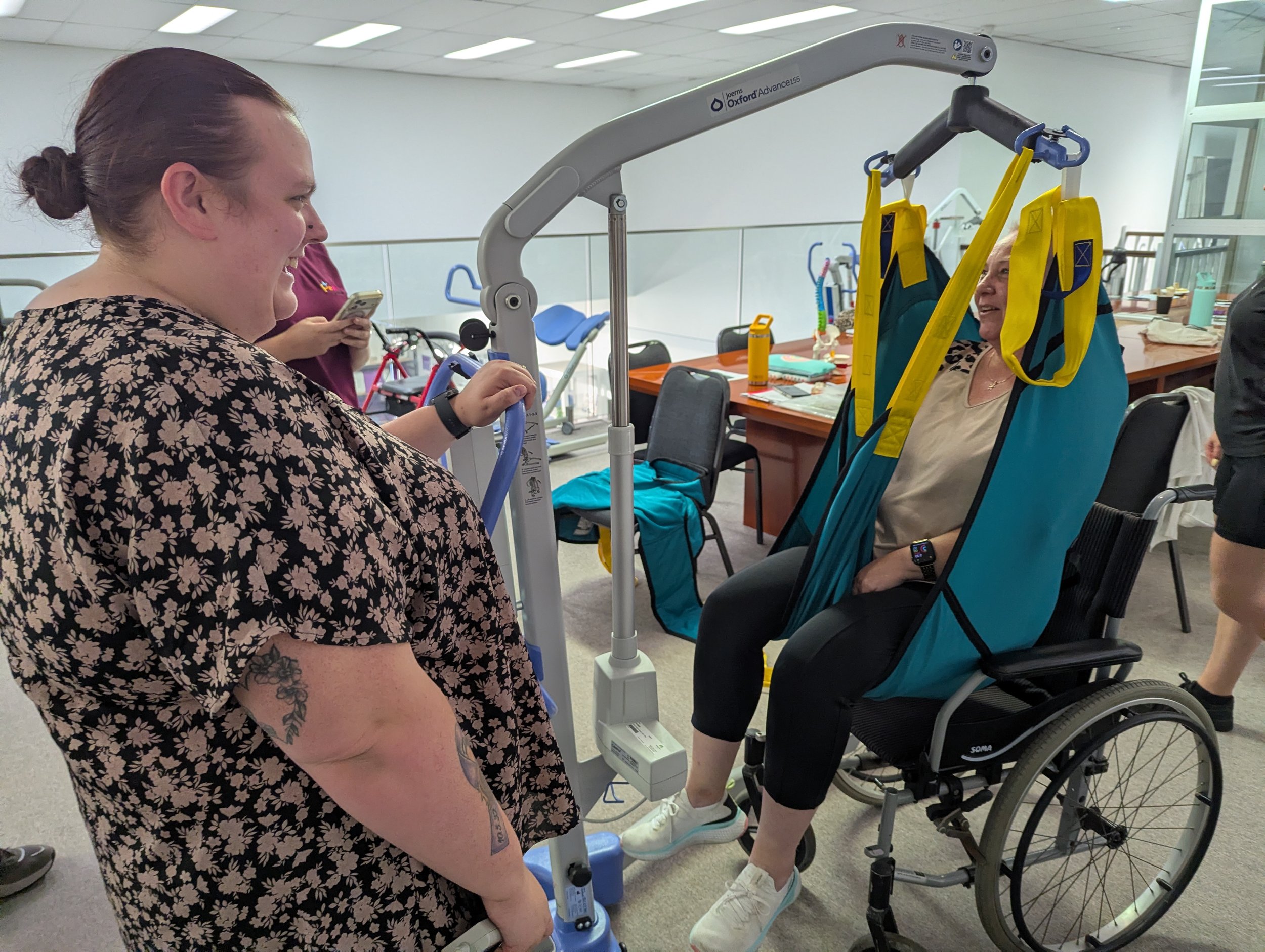
Hoisting, sling fitting and safe positioning, including sling styles and pre-use safety checks.
Assisted bed mobility techniques, including slide sheet use.
Equipment problem-solving – what to do when the right equipment isn’t available or isn’t working as it should.
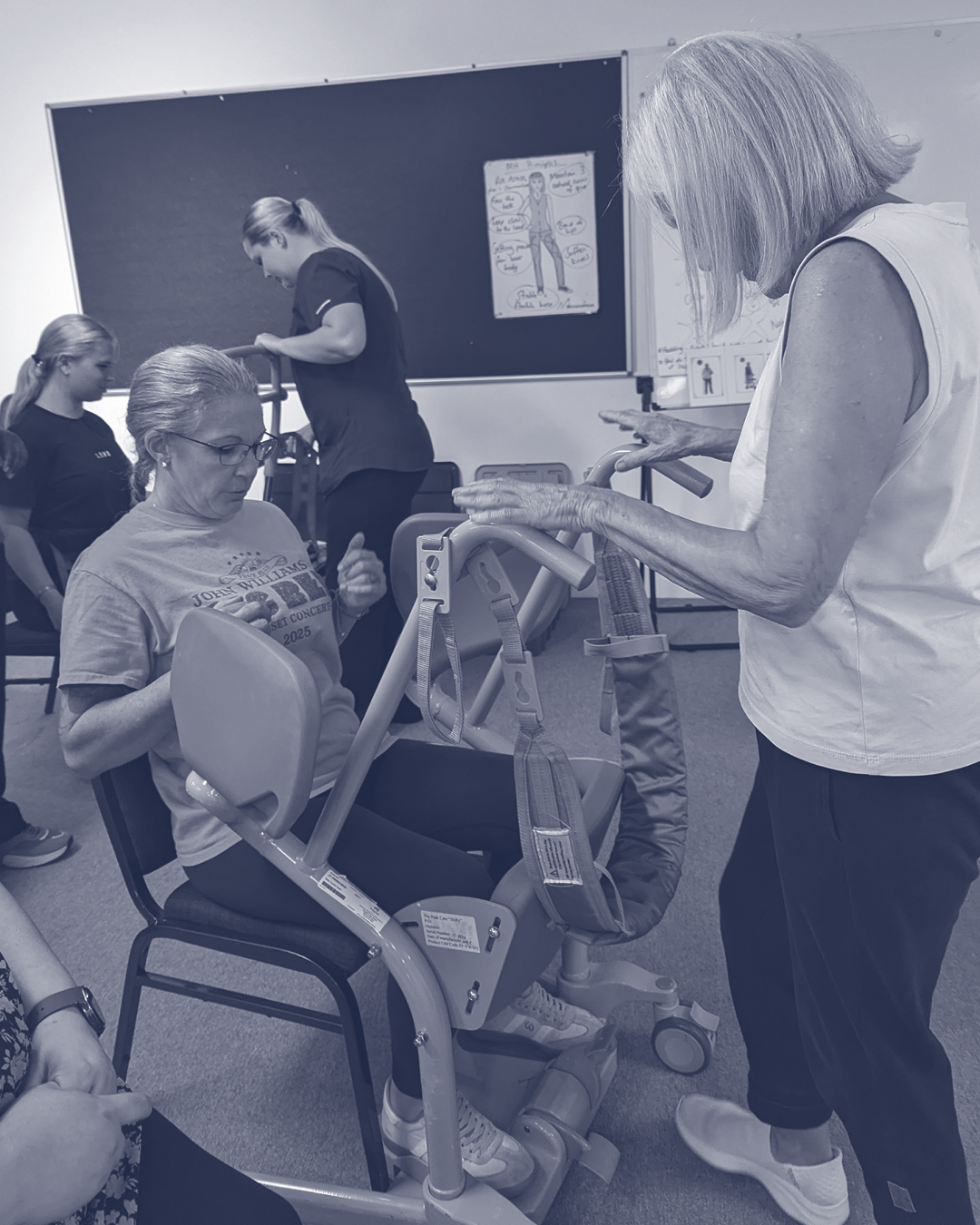
Hands-on practice using the equipment with each other, to feel what it’s like to be assisted and how that shapes the support you provide.
Small-group, scenario-based problem-solving, coached and corrected in real time by an OT.
Time for participants’ own questions and the situations they’re actually facing in their work.
Venue, current equipment and catering for morning tea and lunch all provided.
The day closes with a wrap-up covering what to do next, who to talk to, and where to go for support.
What support workers walk away with
A working understanding of their WHS responsibilities and how the Code of Practice applies to their role.
Practical confidence in the equipment and techniques used every day in disability and aged care support.
A clear, simple method for spotting and reporting hazards before they become incidents.
Evidence of current, OT-led training that organisations can hold on file and support workers can point to in their own right.


How this training meets your legal requirements
This maps what happens in training directly against what WHS law and the Code of Practice actually ask for – so both organisations and individual workers can see exactly what's covered, not just take our word for it.
-
OT-led theory covers duties, hazard identification and reporting pathways in plain, practical language — not generic compliance slides.
-
Course content is mapped directly to the Code's people-handling and hazardous manual task provisions, so organisations can evidence how frontline training meets the standard.
-
A structured risk-thinking framework is taught and practised against real support scenarios, not just explained in theory.
-
A day of hands-on, equipment-based practice – hoisting, slings, slide sheets, bed mobility and assisted standing, coached and corrected in real time by an OT.
-
Delivered and signed off by a practising Occupational Therapist, with attendance records and a completion outcome organisations can hold on file.

A feedback report for your organisation
When three or more staff from the same organisation attend together, Movementum also provides a feedback report following the session. It brings together a summary of what was covered on the day, any hazards or risks your staff raised in relation to their own care services, and a summary of their feedback – with photos from the training.
It's a practical, ready-made record for your WHS file, and a useful starting point for conversations about what to prioritise next – whether that's a follow-up review, equipment changes, or ongoing support for your team.
Led by an Occupational Therapist, not just a trainer
Foundation Manual Handling Training is designed and delivered by Natasha Nutt, Occupational Therapist and Director of Movementum, with over 20 years’ experience in community-based care and manual handling education. Every technique taught is grounded in real clinical reasoning – not a generic template.
Movementum has been training support workers, care organisations and allied health teams in safe manual handling for a decade, with training delivered across the disability and aged care sectors.
Ready to book?
For care organisations
Book Foundation Manual Handling Training for your support workers as part of your induction pathway, your annual refresher cycle, or your response to the new Code of Practice. Group bookings and organisation-specific dates available — send 3 or more staff and receive a feedback report from the session.
SEE TOP OF PAGE FOR UPCOMING TRAINING
For individual support workers
Hold your own current manual handling competency — whether you're self-employed, between placements, or simply want to be confident in the physical side of your role.
SWAA members receive a 10% discount on booking.
SEE TOP OF PAGE FOR UPCOMING TRAINING

Want a more tailored training solution?
Get in touch — we provide a variety of training sessions, days and learning scenarios delivered right across Australia. We'd love to learn more about what you and your team need and put together the right solution.