

Care Service Design
Good work design for your care routines.
An occupational therapist designs your client’s manual handling routine with them and their support workers, then documents it so every shift does it the same way.
Most care routines were never designed. They get handed down from whoever supported the person last, pieced together shift by shift, or built around what’s needed on the day. Support workers do their best with what they’ve been told, and the risk sits with them, with the person they support and with you as the provider.

What is Care Service Design?
Care Service Design is how we put good work design into practice for your care routines. A care routine is the steps, equipment, technique and sequence used to support someone with transfers, repositioning, bed mobility and personal care.
The Code of Practice for the healthcare and social assistance industry describes good work design as “the best way to prevent work-related fatalities, injuries and illnesses.” It deals with the root cause of a risk, so you aren’t relying on weaker controls like asking workers to be more careful.
We design the routine with you, the person you support and one or two of their regular support workers. Ideally that happens when a service starts, rather than after something has gone wrong.
How it works
Start with the person. What matters to them, in their words. We get curious about what’s genuine preference and what has quietly become habit.
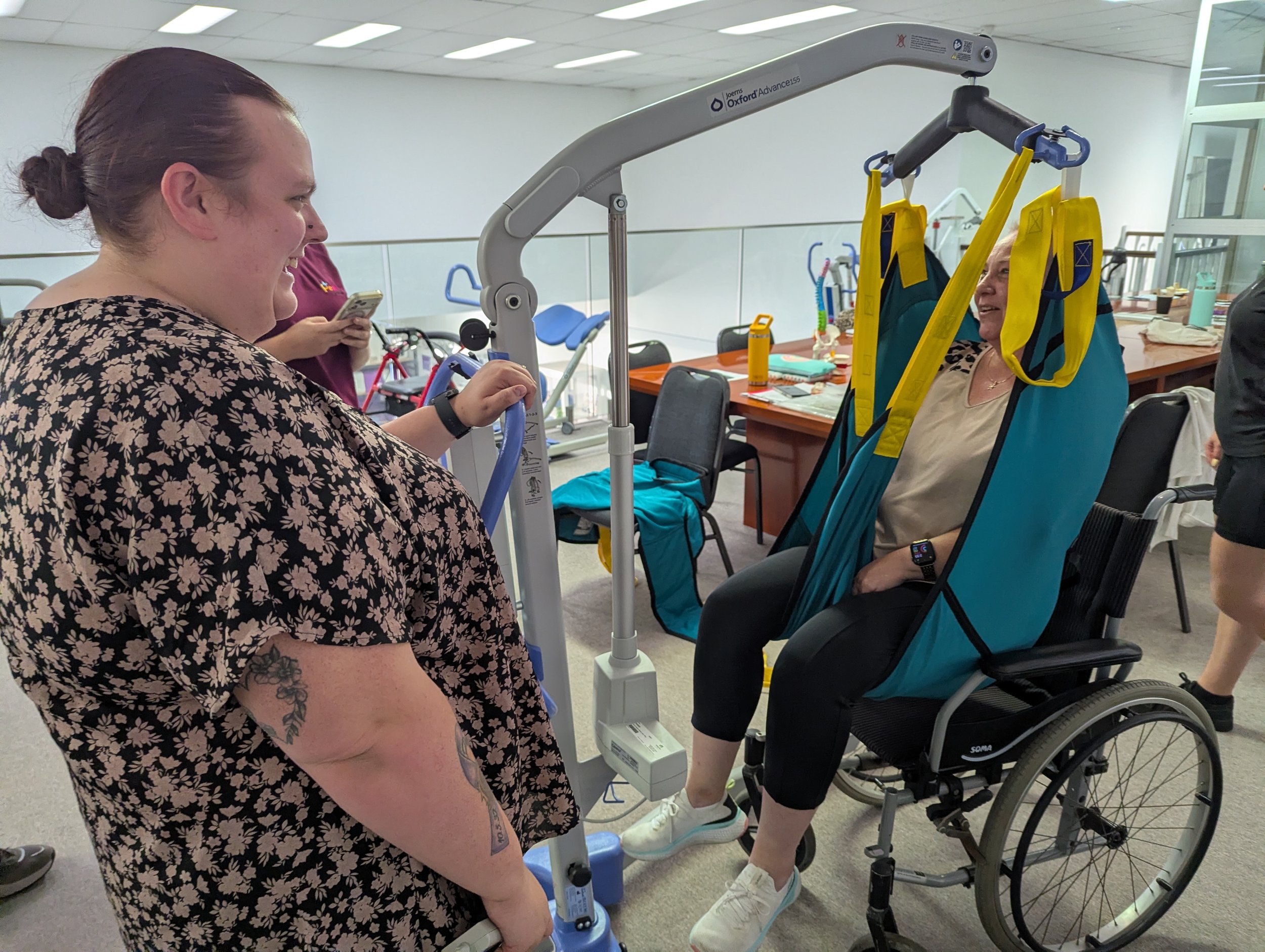
Design it together. An occupational therapist brings the equipment and technique options, so the person and their workers can choose from more than they’ve seen before.
Try it in practice. We work through the routine on the day, adjust it as we go and assess the risk.
Document it and set the review. Written steps, with photos or video where the person consents. The routine becomes a training resource and a baseline for noticing when something changes.

What you stand to gain
A routine you can stand behind. A designed, documented and risk-assessed routine is something you can show. In NSW, approved Codes of Practice have carried legal weight since 1 July 2026.

Fewer worker injuries. The Code of Practice is clear these injuries are “not ‘part of the job’” and “must be prevented wherever possible.”

Consistent care for the person. The same routine whoever is on shift, with their preferences built in.

Faster onboarding. New and casual workers learn from a clear routine instead of starting from scratch.

A clear signal to review. When someone’s needs change it’s easy to see, and the documented routine tells you it’s time to look again.
-
Every driver secured the chair a little differently, kneeling and reaching under it in awkward positions. We assessed the chair for transport, worked through the set-up with a driver and the person, and documented each step with photos. Now the same sequence happens every trip, with time for it built into the roster.
-
Workers decided on the day which method to use, and training had only covered the hoist. We assessed both, set clear checks for when each one is used with a safe default if the checks aren’t met, and trained the team in both. The person keeps their daytime independence and workers know exactly what to do.
-
A lone worker was rolling the person manually in awkward postures, and the person’s sleep was being disrupted. We assessed whether a leave-in-place slide sheet system suited them, designed the routine for one worker and set out when a second worker is needed.
-
Reach out to us … let’s chat through your scenario’s and determine what good designs looks like for your organisation.
What it looks like in practice
Good work design is “the best way to prevent work-related fatalities, injuries and illnesses.”
“If your organisation faces resourcing pressures this does not remove your legal responsibilities to manage WHS risks.”
A risk assessment should happen “before a hazardous manual task is carried out” and “when change is identified.”
SafeWork NSW, Healthcare and Social Assistance Industry Code of Practice, February 2026
What the Code of Practice says
What’s involved
Before we visit. A short conversation with your coordinator about the person, their current routine, the equipment in place and any hazard reports or incidents.

On the day. An onsite session with the person and one or two of their regular support workers, where we design, trial and adjust the routine together.
Afterwards. A documented routine with photos or video where consented, a manual handling risk assessment and a recommended review date.

Training the wider team. Can be accommodated in addition to the just the Care Service Design.
Investment. Quoted per routine after a conversation, based on complexity and travel.
Care managers, coordinators, team leaders and founders who set up and run services
Providers taking on a new client, or reviewing routines for people with complex physical support needs
Families who want confidence that a routine is safe, consistent and built around the person
Who needs Care Service Design
Common questions
-
No. A risk assessment identifies what could go wrong. Care Service Design builds the routine that removes or reduces the risk, and the assessment is part of it. -
Their preferences shape the routine and they lead on what matters to them. Where a person directs how their support is delivered, SafeWork NSW guidance says duties can be shared, and providers are expected to work with them to manage the risks. -
Yes. The Code of Practice says a private home is “a workplace for the worker.” -
No. Most providers start with the most complex or highest-risk routines and work from there. -
Yes. Care Service Design is often part of a Safe Care Package, where we work through your priority routines over six months.


Let’s talk about the routines you’re most concerned about.
Not ready for a full routine design? A 60-minute OT Support Consultation with Natasha can help you work out next steps on one tricky situation.